
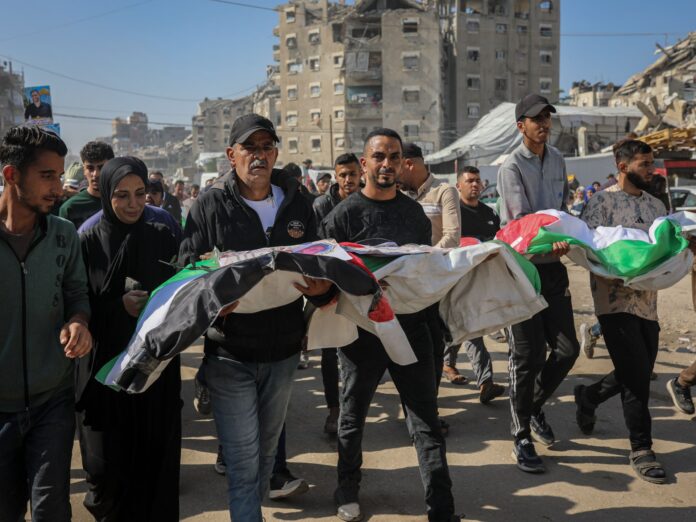

In the Jabalia refugee camp of the Gaza Strip, a man named Mahmoud Nabhan, now in his sixties, has endured a three‑year wait to lay his family to rest. Nabhan’s home, located in Bir an‑Naaja, was struck 20 days after the outbreak of Israel’s war on Gaza in October 2023, killing 17 members of his household, including his seven children and grandchildren. Among the deceased was a 45‑day‑old grandchild.
For years, Nabhan and other families struggled to recover the bodies of their loved ones from the rubble. The difficulty of the terrain, the lack of heavy machinery, and the ongoing hostilities made retrieval missions perilous. Finally, Civil Defence teams were able to retrieve the remains from Nabhan’s collapsed house, allowing him to perform a proper burial for his children and grandchildren.
“All of them were children, all of them were loved ones,” Nabhan said, expressing both relief and renewed grief. He emphasized that no fighters or soldiers were present in the home when it was struck, underscoring the civilian nature of the loss.
The broader context of the conflict has left Gaza devastated. At least 73,600 people have been killed, and 82 percent of structures in the territory have been damaged or destroyed by Israeli air strikes and shelling. Under the rubble, thousands of bodies have remained trapped, with continuous attacks often preventing safe access for families or rescue teams.
A ceasefire reached between Israel and Hamas in October 2025—though repeatedly violated—has opened limited windows for recovery operations. In recent days, Civil Defence teams have retrieved the remains of 69 Palestinians from sites in Jabalia and Beit Lahiya, bringing closure to many families who had waited for years.
Fatima al‑Masri, 47, shared her experience of waiting two years for the remains of her husband and 18‑year‑old son, who were killed in an Israeli attack in the Safatwi area of northern Gaza in October 2024. Al‑Masri described the relentless follow‑ups with Civil Defence, the repeated promises of heavy equipment, and the eventual discovery of bone fragments, a mobile phone, and personal belongings buried beneath the collapsed structure.
These recoveries, though painful, offer families a chance to mourn properly and to place their loved ones in graves. The emotional toll remains significant, as families grapple with the reopening of wounds and the lingering trauma of loss.
Source: Al Jazeera
Read the original article
Editorial note: This is an original news report prepared from the attributed source material with AI assistance. It is not a reproduction or translation of the original article.

