
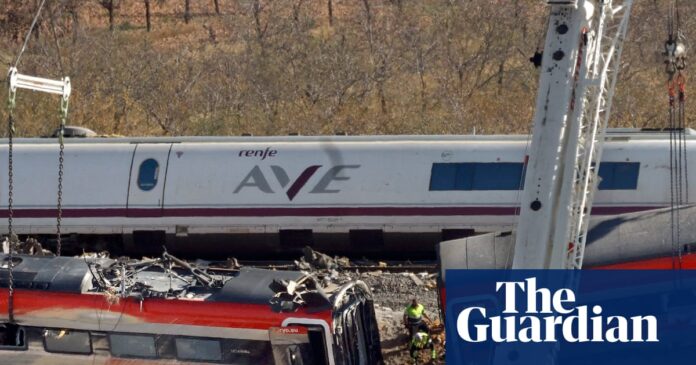

Last week’s high‑speed train collision outside the village of Urda, about 130 km south of Madrid, remains one of Europe’s deadliest rail accidents of the century, claiming 69 lives. Among the victims are 54 Spanish nationals and 15 foreigners, including four U.S. citizens, two Australians, two Japanese, and one each from Argentina, Canada, France, Mexico, Portugal, Tunisia and the Czech Republic.
A legal body comprising police and forensic experts confirmed that the three most recent victims identified were two Australians and a Japanese citizen. The identities of the deceased have not yet been released.
Australia’s Department of Foreign Affairs and Trade (DFAT) announced it was providing consular assistance to the families of the two Australian victims. “We send our deepest condolences to the families at this difficult time,” the department said.
Foreign‑affairs minister Penny Wong expressed her “deepest condolences on behalf of Australia” to Spanish officials and the Spanish public, noting the tragedy’s devastating impact. She also sent her thoughts to those who lost loved ones, the injured, and all affected by the disaster.
The crash occurred when a Renfe service collided with the rear of a stationary Iryo train. An automatic safety system failed to stop all trains on a 63‑km stretch of track, and a control centre authorized the Renfe train to resume its journey while the other train remained stationary.
Spain’s second high‑speed train collision this year has intensified scrutiny of the country’s rail safety protocols, following a January crash in Andalusia that killed 46 people.
Source: The Guardian World
Read the original article
Editorial note: This is an original news report prepared from the attributed source material with AI assistance. It is not a reproduction or translation of the original article.

