
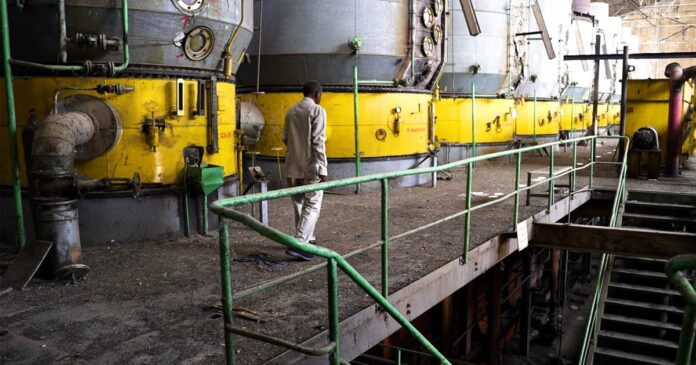

Khartoum’s once‑thriving industrial scene now faces a daunting task of rebuilding. The city, which housed a diverse range of factories—from sweets and textiles to plastic recycling—was a major battleground during the April 2023 clash between the Sudanese Armed Forces (SAF) and the Rapid Support Forces (RSF). The fighting halted production across the country, and the damage has lingered long after the ceasefire.
One of the hardest‑hit businesses is Mansour Gaily’s confectionery factory. Gaily, who employed dozens of local workers, reported that the war cost his company an estimated $1 million in lost machinery, spare parts, and the need to rebuild large sections of the plant. While production has resumed, the factory now operates at only 40 percent of its former capacity.
The situation mirrors the broader crisis in Sudan’s manufacturing sector. According to the Ministry of Industry, about 1,800 industrial facilities sustained damage during the conflict, including 650 that were completely destroyed. Khartoum, once a key industrial hub, has struggled to recover despite the army’s recapture of the city last year.
Abdulelah Mohamed, owner of a plastic products and recycling plant, described the devastation as “catastrophic.” He said, “Damaging, destroying and looting the factories was systematic. We lost everything.” Mohamed echoed a common sentiment among manufacturers: the sector needs a new plan and vision to revive production.
Another affected business is Al Teital Advance Industries, led by chief executive Sara Elfatih Khalil. Her factory, which produced sesame oil and employed 300 workers before the war, saw its warehouses looted and its building damaged. Khalil stressed that industry is essential for economic recovery, but its revival hinges on security, stable policies, legal protection, and reliable financing. She noted that less than 10 percent of factories in the sector are currently operational.
Beyond physical damage, the war has disrupted supply chains, electricity, and transport networks. Raw materials and finished goods were destroyed or looted, and rising import costs have made reopening difficult even for businesses that survived the fighting. The combined effect has left Sudan’s industrial base in a precarious state, with many factories unable to meet the demand for domestic goods.
Rebuilding Khartoum’s factories will require coordinated efforts from government, investors, and the private sector. Restoring confidence in the industrial sector is seen as a cornerstone of Sudan’s broader economic recovery, but it will only be possible if basic conditions—security, policy clarity, legal safeguards, and infrastructure—are firmly reestablished.
Source: Al Jazeera
Read the original article
Editorial note: This is an original news report prepared from the attributed source material with AI assistance. It is not a reproduction or translation of the original article.

