
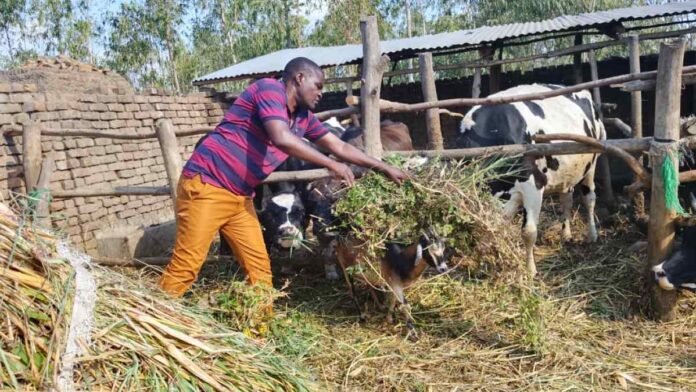

In the Mulanje district of southern Malawi, cattle farmers are traveling farther than ever to secure enough grass for their herds, a trend that has intensified with the worsening El Nino‑induced drought. The Likhubula River, which originates from the towering 3,002‑metre Mount Mulanje, has become a critical source of water and forage, yet its banks are showing signs of decline.
Shortage of Grass Forces Long Journeys
Lawrence Abison, a 25‑year‑old farmer, began his day early, walking along the riverbank to locate patches of green Napier grass and reeds. With a sickle and the help of three friends, they cut and bundled the grass, hauling it uphill and returning to the river for more. After two hours, they had enough to feed ten cattle for a single day.
Later that afternoon, dozens of other men were seen carrying bundles of grass around Chitakale, each having travelled from different directions. “It’s very hard to find the grass these days, that’s why we have travelled this long distance,” Abison told Al Jazeera, sweat‑drenched. He added that even in the immediate vicinity, the grass is insufficient for a week, forcing them to seek fodder further afield.
Changing River Conditions and Climate Stress
Local residents report that the Likhubula River has become shallower over the years, and trees and grass along its banks have disappeared. These changes are felt most acutely by farmers who rely on the river not only for water but also for grazing material.
Malawi’s 2023/24 rainfall season was marked by dry spells and high temperatures, with El Nino altering rainfall patterns across southern Africa. The Department of Climate Change and Meteorological Services warned of below‑normal rainfall and prolonged dry spells, particularly in the southern regions, heightening the threat of drought.
Economic Impact on Local Livestock Owners
Macdonald Khandalawo, a 54‑year‑old cattle owner in Nsanjama, has kept his herd since 2014. He relies on men like Abison to collect grass from the river, but the cost of maintaining his animals has risen as forage becomes scarcer. “After the rains have stopped, we look for the grass around here but due to the change in climate there has been scarcity of grass. That is why we send these boys to those rivers,” Khandalawo explained. He noted that the long distances sometimes take a full day, and the lack of feed has already begun to affect his cows’ milk production.
As the drought persists, farmers in Mulanje and surrounding districts are forced into a competitive scramble for dwindling resources, underscoring the urgent need for climate‑resilient solutions and support for rural communities.
Source: Al Jazeera
Read the original article
Editorial note: This is an original news report prepared from the attributed source material with AI assistance. It is not a reproduction or translation of the original article.

