
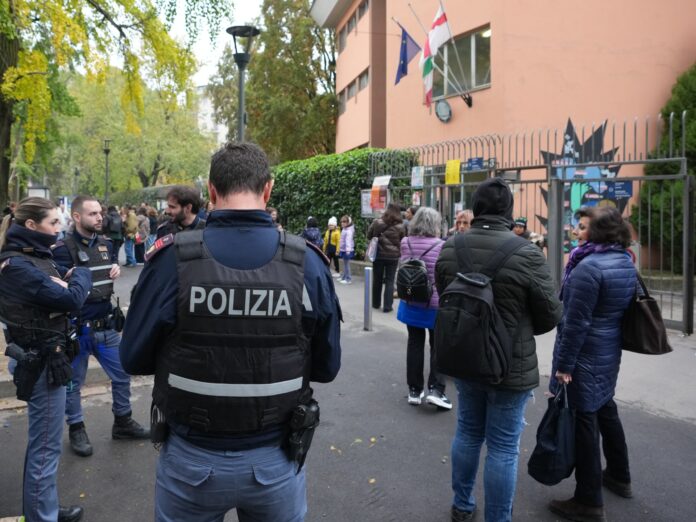

More than 1,800 schools across Italy received bomb‑threat emails on Thursday, prompting immediate closures and widespread disruption. The alerts, which followed a similar wave of 6,300 messages the day before, were signed by a purported figure named “Mikhail Andropov,” who claimed to be the leader of the “Vilayat of Misoginistan.” Police in Rome confirmed that the threats were unfounded, stating there was no evidence to support any real danger.
In response, Prime Minister Giorgia Meloni convened opposition leaders to discuss how to handle such incidents. Meloni’s office clarified that schools should not evacuate unless concrete evidence of a threat exists, and that instructions would be issued to schools accordingly. The government emphasized that buildings should remain occupied unless a genuine danger is proven.
Similar hoax emails had also reached schools in Scotland, Northern Ireland and the Republic of Ireland. Those authorities classified the messages as false and allowed classes to continue, citing the lack of credible evidence.
Opposition parties criticized Meloni’s focus on conventional military spending, arguing that cyber threats are increasingly pressing. Elly Schlein, leader of the Democratic Party, called for stronger coordination among cybersecurity bodies and suggested reallocating resources toward cyberdefence.
The incident comes amid growing concerns across Europe about hybrid warfare tactics that target critical infrastructure such as supermarkets, blood banks, air traffic control and broadcasters. France recently accused Iran of a cyberattack that disabled refrigerators in hundreds of supermarkets, a claim Tehran dismissed as “baseless” and “hostile.” Some European officials suspect Russia of orchestrating similar campaigns in countries supporting Ukraine, though Russia denies any involvement.
Source: Al Jazeera
Read the original article
Editorial note: This is an original news report prepared from the attributed source material with AI assistance. It is not a reproduction or translation of the original article.

