
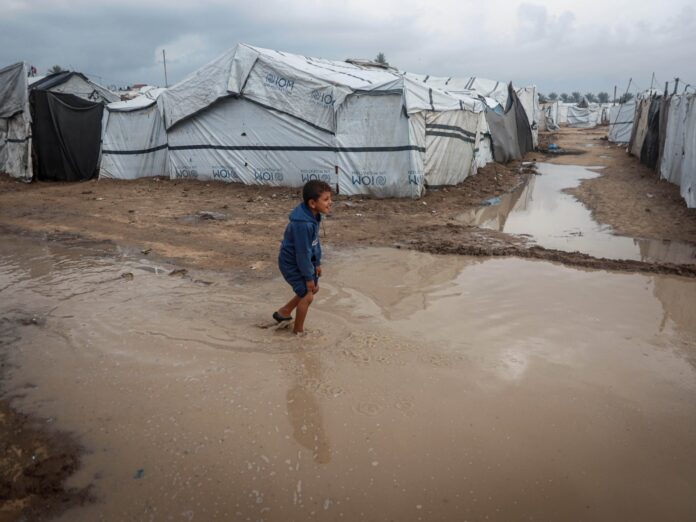

In the central Gaza Strip’s az‑Zawayda area, a heavy rainstorm on Saturday night turned a family’s temporary shelter into a flood zone. Jaber al‑Kaseeh, a man in his seventies, woke to water rushing into his tent, soaking mattresses, carpets and the limited food supplies his family had managed to keep. He described the surrounding displacement camp as “a swimming pool” as the rain swept across the region.
According to the Gaza Government Media Office, more than 70,000 tents have been flooded since the storm began late on Friday. Hundreds of thousands of displaced Palestinians are now sheltering in locations that are “highly vulnerable” to further flooding. The situation is especially dire for families who have been living in tents for the fourth winter, like Jaber’s, who originally came from Beit Lahiya in northern Gaza.
Jaber’s camp has been flooded multiple times over the past year, forcing many families to leave. While about 40 tents still remain, the latest deluge has left them in even worse condition, with all tents damaged, torn and covered in mud. “We urgently need tents, tarpaulins, plastic sheets, mattresses, blankets and carpets to protect us from the difficult days ahead,” he said. He added that although there have been reports of tents and tarpaulins being distributed, his family has received nothing.
The broader shelter crisis in Gaza is rooted in the “ceasefire” agreement signed between Israel and Hamas more than a year ago. The deal included provisions for temporary housing units, tents and heavy machinery to clear rubble and restore damaged infrastructure. However, Israel has continued to block the entry of goods into Gaza, including 60,000 mobile homes and 200,000 tents. Only 20,000 tents have been allowed in, and the mobile homes remain parked on the Egyptian side of the border, many for over two years.
Jaber expressed frustration at the unfulfilled promises of the ceasefire deal. “We had hoped the mobile homes and temporary housing units promised under the ceasefire deal would allow us to rest and return to a life of safety and peace. But it was all just words in the air. We have seen nothing,” he said.
More than 90 percent of Palestinians have been displaced by the war that began on October 7, 2023, with many families experiencing multiple displacements. The ongoing blockade and restrictions on aid have left them in makeshift shelters that are exposed to harsh winter weather and flooding.
International observers and humanitarian organizations continue to call for the immediate delivery of shelter materials and the removal of barriers that prevent the arrival of essential goods. The situation remains critical as the region faces another wet season, threatening the safety and well‑being of thousands of displaced families.
Source: Al Jazeera
Read the original article
Editorial note: This is an original news report prepared from the attributed source material with AI assistance. It is not a reproduction or translation of the original article.

