
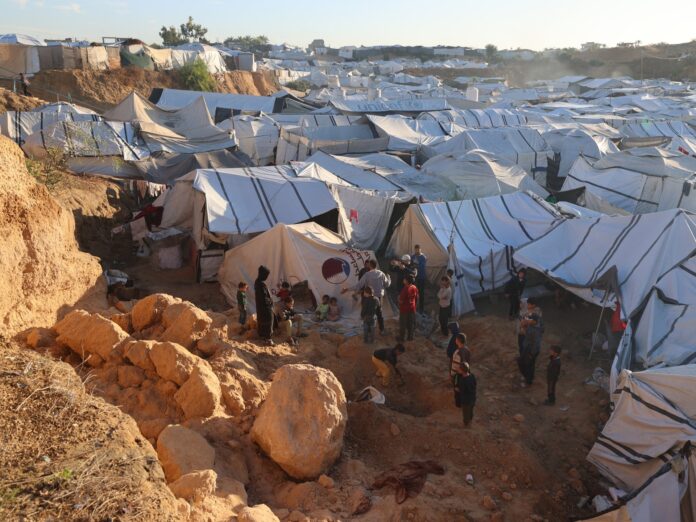

In the early hours of the weekend, a severe storm swept across Gaza, inundating roughly 70,000 temporary shelters within 12 hours. The deluge claimed at least five lives and inflicted an estimated $3 million in damage, according to the Gaza Government Media Office. By Monday, the Civil Defence had recorded more than 2,100 distress calls, warning that over 2,000 structures were at risk of collapse. Nearly 400,000 displaced residents are now living in areas deemed highly vulnerable.
Compounding the humanitarian crisis, Israel has restricted the entry of 60,000 mobile homes and 200,000 tents into Gaza, allowing only 20,000 tents to be brought in. This restriction comes as the region grapples with the aftermath of a three‑year conflict that has destroyed or damaged about 85 percent of homes. The Gaza Crossings and Borders Authority reported that Israel also halted the entry of aid trucks and commercial goods on November 6 and 7, permitting only five trucks of cooking gas the following day. The United Nations Office for the Coordination of Humanitarian Affairs (OCHA) noted that Israel had notified the UN on November 1 of a suspension of shipments from Egypt, a move that could reduce the daily provision of cooked meals from 600,000 to 330,000.
Amid these dire conditions, the Gaza Ministry of Health recorded 20 additional Palestinian deaths over the past week, bringing the total toll since the October 2025 ceasefire to 1,613 as of November 9. The weekend storm occurred while Hamas urged mediators and the Board of Peace not to tie reconstruction efforts to political or security conditions.
Meanwhile, political developments in Israel are shaping the future of the region. President Isaac Herzog granted opposition leader Gadi Eisenkot the mandate to form a government after 67 members of parliament endorsed him, versus 46 for Prime Minister Benjamin Netanyahu. Eisenkot seeks a “national emergency government” that would accept four principles, including recognition of Israel as a “Jewish and democratic” state and the destruction of Hamas as a terrorist organization. Netanyahu, in contrast, called for a “national unity” government that would include Eisenkot, Likud, and his Haredi and far‑right allies, warning that a government reliant on Arab‑led parties would be backed by those who “want to eliminate Israel.”
Within the Arab‑led bloc, the Joint List has stated its priority is to topple the Netanyahu government but will not join an administration that violates international law. It also demands action on education, welfare, and crime if it is to support Eisenkot from outside the government. In discussions with Herzog, Mansour Abbas, leader of the United Arab List (Ra’am), declined to label Hamas a “terror” group, citing concerns for his family, while supporting its disarmament. Avigdor Liberman, head of the opposition Yisrael Beytenu party, reiterated that no government should rely on either Palestinian‑led party.
Source: Al Jazeera
Read the original article
Editorial note: This is an original news report prepared from the attributed source material with AI assistance. It is not a reproduction or translation of the original article.

