
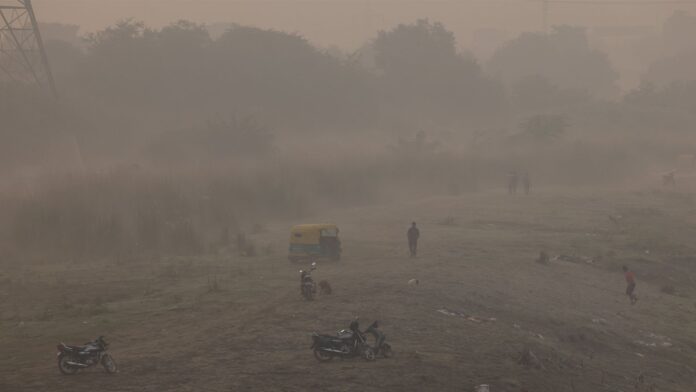

In a stark reminder of the growing environmental crisis, Delhi has surpassed Lahore to become the world’s most polluted city, according to the latest global air‑quality assessment. The study, which analyzed data from thousands of monitoring stations, found that Delhi’s average particulate matter (PM2.5) levels exceeded 200 micrograms per cubic meter—more than double the threshold set by the World Health Organization for safe air.
Experts say the spike is driven by a combination of vehicular emissions, industrial activity, and seasonal crop burning in the surrounding regions. “The health implications are severe,” said Dr. Ananya Rao, an environmental scientist at the Indian Institute of Technology. “We are seeing increased respiratory illnesses, especially among children and the elderly.”
Meanwhile, in the United Kingdom, a new wave of controversy has emerged as the government is accused of silencing pro‑Palestine voices by imposing entry bans on activists. Human rights groups argue that the bans target individuals who have publicly supported Palestinian rights, effectively stifling dissent and limiting free expression.
“The UK’s policy is a clear attempt to suppress legitimate political discourse,” said Maya Patel, director of the Freedom of Speech Coalition. “These bans are not based on any credible security threat.”
According to the coalition, several activists were denied visas after participating in peaceful demonstrations in the Middle East. The government, however, maintains that the restrictions are part of a broader effort to prevent extremist infiltration.
Both stories highlight the complex interplay between public policy and human well-being. While Delhi’s air quality crisis underscores the urgent need for environmental reform, the UK’s entry bans raise questions about the balance between national security and civil liberties.
International observers are calling for transparent investigations into both matters. In Delhi, the government has pledged to implement stricter emission controls and expand green spaces. In the UK, lawmakers are urged to review the criteria used for visa denials to ensure they do not infringe on fundamental rights.
Source: Al Jazeera
Read the original article
Editorial note: This is an original news report prepared from the attributed source material with AI assistance. It is not a reproduction or translation of the original article.

