

In a startling series of incidents, hackers have twice commandeered supermarket refrigeration units across Europe, causing fires and rendering millions of euros’ worth of food unsafe. The first wave struck French stores on October 11 and 12, when attackers raised the temperature of about 700 fridges to as high as 50 °C (122 °F). A second wave on November 2 targeted supermarkets and food businesses in at least nine countries, including Belgium, Estonia, Finland, Ireland, Italy, Luxembourg, the Netherlands, Portugal and Sweden.
French authorities have identified the initial attack as the work of Shahid Kaveh, a cyberunit linked to Iran’s Islamic Revolutionary Guard Corps (IRGC). They describe it as the first large‑scale sabotage cyberattack on French soil. The perpetrators behind the November wave remain unknown.
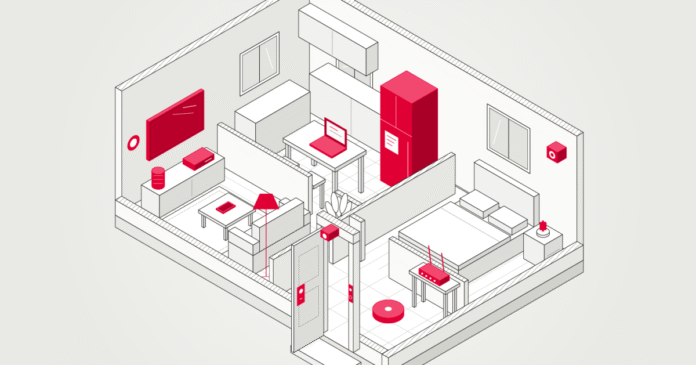
These breaches highlight the vulnerability of internet‑connected appliances. Supermarket fridges and freezers are typically managed from a single control panel that is linked to the internet to allow remote maintenance. Home smart fridges use the same connectivity model, relying on Wi‑Fi, mobile apps or cloud services. Attackers discovered these systems through Shodan, a search engine for internet‑connected devices, and exploited basic security failures to gain access.
Once inside, hackers can switch a fridge off, raise its temperature or steal account details. In France, the attackers used the defrost function to heat the units. A poorly protected fridge can also serve as a gateway to other devices on the same network, such as laptops or smart locks.
Vincent Strubel, head of France’s National Cybersecurity Agency (ANSSI), warned that the same type of equipment is used in healthcare settings to store vaccines and hazardous materials, from research laboratories to pharmacies. He emphasized that any device connected to the internet could be at risk.
Globally, there are an estimated 21 billion short‑range connected devices, such as smartwatches, and 5.4 billion long‑range ones, such as remote monitoring systems, according to Kepios’s Digital 2027 Global Overview Report. In the United States, the average household now has about 18 connected devices, nearly double the number a decade ago.
Routers are among the most targeted devices because they are always online. In April, the UK’s National Cyber Security Centre (NCSC) warned that hackers linked to Russia’s GRU military intelligence were hijacking home and small‑business routers by tampering with DNS settings, redirecting users to fake websites to steal passwords and personal details.
Smart TVs are also vulnerable. In June, researchers discovered that more than a third of apps on LG and Samsung smart TVs could allow unauthorized access to the device.
These incidents underscore the need for stronger security measures on all internet‑connected devices, especially those that play a critical role in food safety and public health. Consumers and businesses alike should ensure that firmware is up to date, default passwords are changed, and network segmentation is employed to limit the spread of potential breaches.
Source: Al Jazeera
Read the original article
Editorial note: This is an original news report prepared from the attributed source material with AI assistance. It is not a reproduction or translation of the original article.

