

In a bold move that blends art, activism and gaming, a group of creators has launched a counter‑campaign against the Trump administration’s new “Arcade” website, a collection of browser games that turned classic titles into political propaganda. The initiative, led by the anonymous collective The Secret Handshake, seeks to reclaim the language of play for democratic purposes.
From Propaganda to Protest
In early September, the White House unveiled Arcade, a series of browser games that re‑imagined familiar titles such as Flappy Bird, Snake and Tetris with a distinctly partisan twist. The games promoted the administration’s hard‑line immigration policies and other hot‑button issues, while dehumanising their opponents. New additions included a Temple Run clone called Red Scare, which forced players to navigate a “ration market” while avoiding the Democratic Socialists of America, and a simple item‑matching game that framed socialism as a threat.
When the games drew criticism for copyright infringement, the Tetris Company publicly warned the White House that it “took copyright infringement very seriously.” The games were removed from the site a few days later, but the incident sparked a broader conversation about the use of popular IP for political messaging.
Operation Epic Furious: A Satirical Response
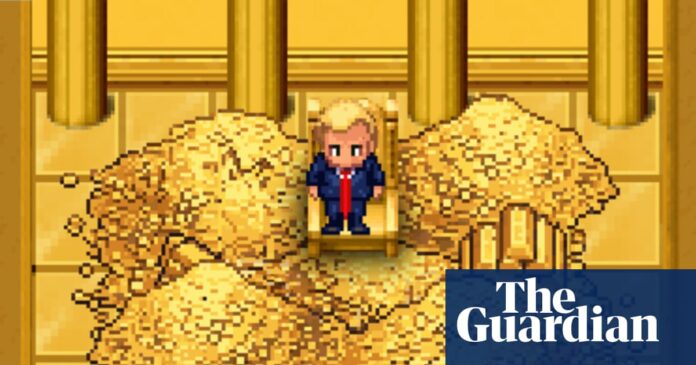
In response, The Secret Handshake released Operation Epic Furious: Strait to Hell, a satirical game that places players in the role of President Trump. The game opens with a choice that mirrors the real‑world debate: order a Diet Coke or invade Iran. As the player progresses, the game parodies Trump’s foreign policy by having him head to Iran to collect barrels of oil—referred to in the game as “lube”—and confront a series of absurd obstacles.
Beyond the digital realm, the collective installed three free arcade cabinets on the National Mall, turning a public space into a site of political theatre. The cabinets feature the same satirical game, allowing visitors to experience the critique firsthand.
Why It Matters
By turning the tables on the administration’s use of gaming, the artists are challenging the narrative that politics can be reduced to a series of choices in a digital sandbox. They argue that the gamification of policy decisions risks trivialising complex issues and alienating voters who feel misrepresented.
“We’re not just mocking the president; we’re reclaiming the language of play for the people,” said a spokesperson for The Secret Handshake. “If the administration can turn a classic game into propaganda, we can turn it into a tool for critical thinking.”
Industry Response
While major video game companies have largely stayed silent, the Pokémon Company issued a statement in March 2026 condemning the White House’s use of its characters in ICE propaganda. The incident highlights a broader tension between corporate IP owners and political messaging.
As the political climate continues to polarise, the Secret Handshake’s initiative demonstrates how creative expression can serve as a form of resistance. By re‑imagining familiar games as vehicles for critique, the collective invites players to question the narratives presented by those in power.
Source: The Guardian World
Read the original article
Editorial note: This is an original news report prepared from the attributed source material with AI assistance. It is not a reproduction or translation of the original article.

