
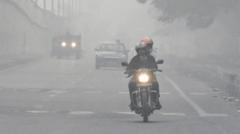

As Delhi’s winter settles in, residents are bracing for another bout of severe air pollution. The capital’s notorious smog, which intensifies when temperatures drop and winds calm, has returned to its familiar, hazy state.
In a typical Delhi home, a 43‑year‑old teacher keeps two cardboard boxes on the living‑room floor: one filled with Diwali lights and the other with air purifiers. “The mornings have already started feeling stuffy. It will get worse in the coming days, so it’s better to be prepared,” she says, echoing a sentiment shared by many Delhiites.
Each winter, the city’s air quality deteriorates as crop‑burning smoke from neighbouring states mixes with vehicle exhaust, factory emissions and construction dust. Firecracker use during festivals further aggravates the problem.
Last year, the Delhi government launched a Winter Action Plan that runs from 1 November to 28 February. The plan limits the entry of older, polluting vehicles registered outside the city, requires emission‑certified fuel for all cars, and temporarily bans demolitions and outdoor construction that generate dust. It also encourages remote work and staggered office hours to reduce private vehicle use.
Experts welcomed the early rollout of the plan, noting that previous years often saw measures introduced only after air quality deteriorated to dangerous levels. However, they caution that the plan alone will not solve the problem and call for more comprehensive, long‑term solutions.
Despite the new regulations, Delhi’s skies have already turned grey, with a distinct smoky smell that residents recognize. Many report eye irritation, coughing and difficulty breathing. Those who can afford it have turned air purifiers into a household necessity, while others rely on masks or cloth coverings to protect themselves outdoors.
The Winter Action Plan remains a key test of the ruling Bharatiya Janata Party’s environmental promises made during its election campaign. Whether the measures will be enough to curb Delhi’s recurring smog remains to be seen.
Source: BBC World
Read the original article
Editorial note: This is an original news report prepared from the attributed source material with AI assistance. It is not a reproduction or translation of the original article.

