
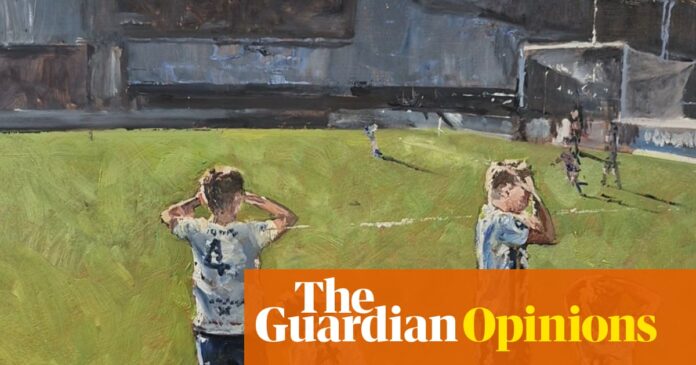

The National Football Museum in Sheffield has opened the latest edition of the Football Art Prize, a competition that has been revived after a 20‑year hiatus. The event showcases a wide range of contemporary works that capture the spirit of football, from intimate portraits of players to stark depictions of the sport’s social impact.
From Futurism to Modernity
Football has long been a rare subject in fine art. Early examples include Umberto Boccioni’s 1913 painting Dynamism of a Soccer Player, which uses swirling lines to convey motion, and the 1930s abstract piece by Kazimir Malevich, Painterly Realism of a Football Player. These pioneering works set the stage for a more recent tradition that began in 1953 when the Football Association, with support from the Arts Council, launched an art prize. Winning entries such as LS Lowry’s Going To The Match highlighted the cultural intersection between sport and art.
Although the original prize did not immediately bridge the two worlds, it established a precedent that is now being enthusiastically revived. The current competition, the third iteration in the past two decades, features a diverse array of submissions that demonstrate the enduring relevance of football as a subject for contemporary artists.
Contemporary Voices
Among the 2026 contenders is Mark Bonello’s The Sigh Of 4, a striking piece that captures the tension of a match in a minimalist style. The exhibition also includes Felix Higham’s Newcastle 2 Barcelona 7, which focuses on football culture rather than the game itself, and a series of still lifes depicting battered balls and boots mid‑clean, evoking the memory of the sport’s physicality.
One of the most powerful entries is a photo‑documentary series showing Bangladeshi youths playing a pickup game in the middle of a rubbish dump, highlighting the sport’s resilience in challenging environments. The collection also addresses climate change, with images of pitches affected by rising temperatures and flooding.
Insights from the Museum
“You see the whole gamut of footballing experience on display,” said Pip Diment, the museum’s exhibitions director. “Pretty much every artist is expressing how football matters to them, but they’re responding and reacting in such different ways.” Diment noted that her initial expectation of showcasing iconic moments and players was overturned by the breadth of personal expression on view.
While the exhibition includes works by well‑known artists, it also features emerging voices who use charcoal, hyper‑realism, and mixed media to explore the sport’s cultural significance. The diverse range of styles underscores the idea that football continues to inspire creative expression across disciplines.
As the Football Art Prize 2026 unfolds, visitors can expect to encounter a rich tapestry of visual narratives that celebrate the game’s past, present, and future. The event reaffirms that football, beyond its athletic dimensions, remains a powerful catalyst for artistic exploration and cultural dialogue.
Source: The Guardian World
Read the original article
Editorial note: This is an original news report prepared from the attributed source material with AI assistance. It is not a reproduction or translation of the original article.

