
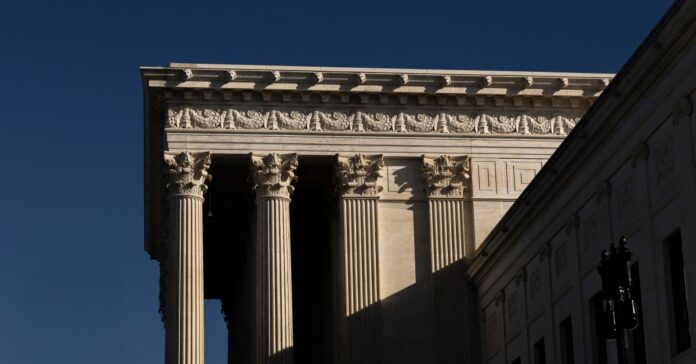

The U.S. Supreme Court heard arguments last week in a case that could redefine how religious schools interact with state programs. The dispute centers on St. Mary Catholic Parish’s refusal to enroll children of same‑sex parents in Colorado’s universal preschool initiative, which requires all providers to sign a nondiscrimination agreement.
Colorado’s program offers free preschool to all children, but participation demands that schools accept students regardless of the sexual orientation or gender identity of the families. The parish contends that enrolling children from same‑sex households would compromise its religious environment, while the state argues that the requirement is neutral and generally applicable, and therefore does not warrant an exemption.
At the heart of the case lies the 1990 Employment Division v. Smith decision, which established that a neutral law that burdens religion does not automatically trigger a religious exemption. That ruling overturned the earlier Sherbert v. Verner standard, which required a compelling state interest to justify such burdens.
During oral arguments, several justices voiced doubts about Colorado’s nondiscrimination mandate. Justice Samuel Alito cited recent rulings that intersect religious freedom and LGBTQ rights, suggesting they support the parish’s request for exemption. Justice Amy Coney Barrett questioned whether there was enough evidence of discrimination against LGBTQ families to justify the blanket policy that would deny the parish state funding. Justice Brett Kavanaugh referenced the Court’s history of balancing religious liberty with anti‑discrimination principles, noting that decisions like Obergefell and Masterpiece emphasized the need to respect both constitutional rights and religious convictions.
Justice Sonya Sotomayor challenged the parish’s position directly, asking whether the school could refuse admission solely because a child’s parents are homosexual. She later probed whether the parish’s stance would allow a school to reject a child based on the parents’ sexual orientation.
The outcome of this case could signal a shift toward stronger protections for religious exercise, potentially overturning nearly four decades of precedent that has limited religious exemptions. If the Court sides with St. Mary, it would reinforce the principle that neutral, generally applicable laws may still be subject to scrutiny when they impose a significant burden on religious institutions.
Source: Christianity Today
Read the original article
Editorial note: This is an original news report prepared from the attributed source material with AI assistance. It is not a reproduction or translation of the original article.

